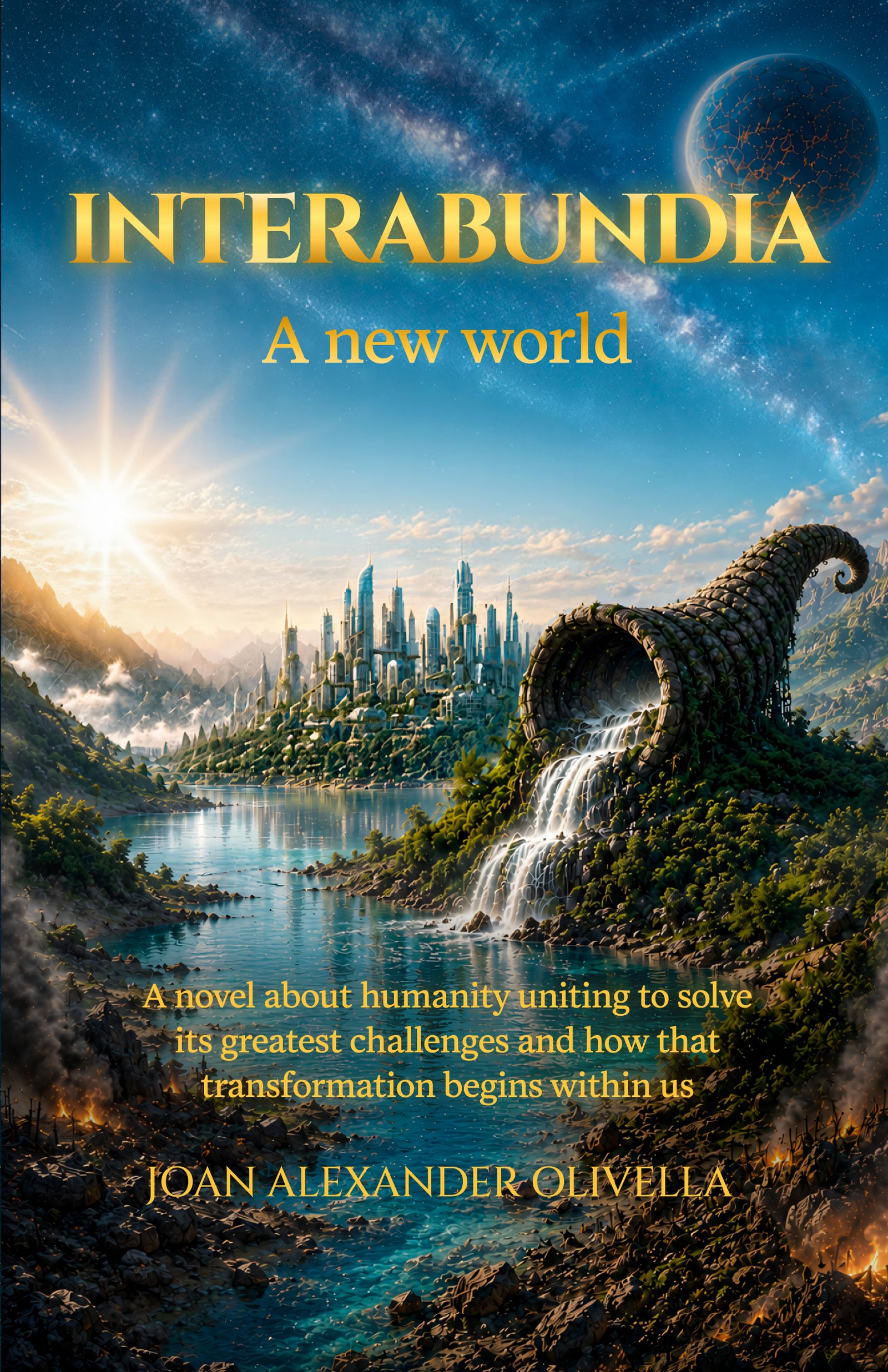
Imagine a world where humanity has not only survived its greatest challenges, but has learned to flourish together. Where Interdependence is no longer a choice: it is almost a physical law.
On that ground of shared trust, Abundance has accomplished what seemed impossible. Energy is virtually limitless —nuclear fusion, renewables— and AI and quantum computing have multiplied what we can do with it. This, coupled with an ambitious innovation agenda, long-term supply-side policies, and a network of purpose-driven businesses, has collapsed the cost of almost everything that matters: housing, healthcare, education, and food are so accessible that scarcity has ceased to exist. Extreme poverty has been eradicated.
The extraordinary productivity of an artificial superintelligence designed with maternal instincts funds a universal basic income. An economy anchored to the real abundance we create, not the scarcity we hoard. Inequality hasn't vanished, but it no longer determines who can live with dignity.
Because full abundance will have freed what we need most: time and freedom to dedicate to those we love and to pursue our most ambitious dreams with purpose. And humanity will have ceased to be a single-planet species: not to escape Earth, but to care for it better and take consciousness further.
And we will have understood something about suffering. Suffering is the rejection of reality as it is. Pain happens —it is part of being alive— but suffering is added: it is born when the world of our stories refuses to accept what is actually happening. That form of suffering, the most universal and deepest, is at least in part trainable. Perhaps, in its most unnecessary form, avoidable.
Interabundia's boldest vision is ethical: that one day humanity will clearly know how to distinguish what is real from a story it has told itself. That every person learns to accept reality as it is —not out of resignation, but as a starting point to act without the friction of unnecessary suffering. The development of consciousness will have been the first step to transform suffering into happier lives and unlock each person's potential.
Beyond that, on a distant and difficult yet plausible horizon, perhaps we can explore whether subjective consciousness connects to something greater. Whether a real collective consciousness emerges when millions of minds cooperate, create, and care together. And whether that consciousness, subjective and collective, can travel beyond Earth and flourish across the universe.
There will always be problems: the “villain” that always returns is our own stories. We need them —they are what allows us to coordinate among millions, across borders— but they are also our greatest risk: when a story ceases to be recognized as a story, it can no longer be corrected, and then it devours us.
At least humanity will have learned to distinguish it, to tell its stories for what they are: useful fictions that allow us to build together and face whatever challenges come, not absolute truths that no one can question.
Wonderland is within our reach. Within every human hero are real powers that make us better and happier: Singularities are not fiction, they are cultivable capacities. The hard part is not believing in them; it is believing that, together, we can go this far. But after all, who doesn't like to believe in an epic story about the future of humanity?
Let us dream in Interabundia: another, better world is possible. It is within our reach if we keep the three Pillars together: Interdependence, to cooperate and unite humanity; Abundance, to dream and build what is missing; and Consciousness, to feel and be felt, orient ourselves, and awaken all our inner potential.
Now, everyone onto the stage.
Wonderland is not a destination you arrive at: it is the path we walk together.